

A good influencer campaign is won during the brief creation, not on publishing day. A brand's broad expectation like "being more visible" does not guide creator selection unless it clarifies who to reach, with what message, and through which content behavior. For this reason, in the first meeting, we discuss the business problem the campaign needs to solve, not just account lists.
To speed up the proposal process, you can share a brief description of the product or service, your target audience, the planned publishing period, and whether the content will be used on brand channels. If the budget framework is known, it helps prioritize options realistically; if not, we can proceed through scope alternatives. In any case, a definitive cost is never assumed before seeing creator agreements and delivery conditions.
On this page, we cover campaign types, content formats, budget factors, legal labeling obligations, measurement methods, industry-specific approaches, and the pre-publishing checklist separately. The glossary at the end of the page brings together common concepts used during the campaign process in one place.
Who is this service for, and who is it not for?
Brands with clear goals
For teams wanting to translate awareness, consideration, content creation, or action goals into a campaign brief. If the goal is clear, the creator profile, content format, and measurement plan take shape faster; uncertainty is discussed during discovery, not guessed.
Those looking to centralize operations
For brands wanting to manage creator communications, approvals, publishing calendars, and reporting in a single flow. Instead of scattered message threads for teams working simultaneously with multiple creators, a single scope document and calendar are used.
Those seeking guaranteed results
Not for requests demanding specific sales, follower, or reach guarantees, or expecting definitive results without sharing measurement conditions. Influencer marketing does not offer the predictability of paid ads; strong content and the right match increase probability but do not guarantee outcomes.
Which brand teams are involved in this process? Usually, the marketing or brand communications team manages the process; the product or category owner verifies the accuracy of claims; for regulated categories, the legal or compliance team is added to the approval flow. In small teams, these roles may merge into one person; in large organizations, the process drags on if it's not clarified upfront how many people the approval round will pass through.
The service is not simply the job of "finding high-follower accounts." The creator's topic fit, content style, relationship with their audience, brand safety, and delivery capacity are evaluated together. If the goal, product suitability, or approval process is not yet defined by the brand, the work starts with a discovery phase.
If the sales page, inventory plan, or tracking links are not ready yet, an awareness or content creation focus might be better than jumping to an action-driven campaign. Conversely, adding complex code and conversion goals to a campaign intended only for visibility creates unnecessary operational friction. We choose the campaign type based on the current readiness level.

Readiness levels vary from brand to brand. If the product, target audience, and message are clear, the campaign structure can be shaped quickly; if these aren't defined yet, a short discovery phase is conducted first. Skipping this step leads to the need to retroactively change creator selections or content approvals later.
Instagram influencer campaign service scope
When determining the scope, we separate what the brand already has from what MyFenomen will produce. The six headings below show the end-to-end work areas of a campaign; not all six may be used with the same intensity in every campaign, and the scope is scaled based on the campaign during the proposal phase.
Brief and strategy
We clarify the business goal, target audience, message, mandatory elements, claims to avoid, and success indicators. This document is the reference for all subsequent steps; creator candidates and the approval process are evaluated against this framework.
Creator matching
We build a candidate pool based on topic, content tone, audience fit, format proficiency, and campaign conditions. The consistency of past posts and brand safety are considered in the first screening of the candidate list.
Proposal and scope management
We document deliverables, publishing times, revisions, usage rights, ad permissions, and reporting expectations. A written scope prevents "was this included too" arguments in later stages.
Content operations
We track brief handovers, draft collections, brand feedback, and pre-publish checkpoints. Feedback is limited to the scope so as not to disrupt the creator's natural storytelling.
Publishing and compliance tracking
We check that posts go live in the planned format; we verify the partnership disclosure and agreed-upon brand elements. If labeling is missing, it is fixed before publishing, not tried to be compensated for afterward.
Reporting and learning
We tie accessible data to the goal, present results with context, and separate learnings for the next run. Which format and creator worked under what condition becomes input for the next brief.

The typical flow in content operations is as follows: the creator receives the brief, shares a draft idea or script, the brand gives feedback, the creator delivers the final version, and the agreed-upon date for publishing is awaited. The number of approval rounds — usually one or two — is written in the proposal phase; demanding unlimited revisions is an additional scope item and is priced accordingly.
If shoot production, product logistics, paid media management, contest mechanisms, or legal reviews are to be included in the scope, they are defined separately before the proposal. This prevents invisible deliverables from accumulating under the term "campaign management."
The product info and verifiable claims the brand will provide are a separate set of inputs. For health, finance, products for children, or regulated categories, a standard approval flow may not be sufficient; competent legal or sector review may be required. MyFenomen's operational check does not substitute for necessary professional review.
How do we work?
The process consists of five steps; the output of each step is the input for the next.
-
Discovery and goal
We learn about the product, target audience, campaign timing, desired action, and current measurement infrastructure. The creators the brand has worked with before and the lessons learned from previous campaigns are also discussed at this stage.
-
Scope and campaign design
Format, creator profile, content quantity, messaging framework, usage rights, and success indicators are determined. The primary goal is clarified; secondary signals are tracked separately so they don't get mixed up at the end of measurement.
-
Candidate selection and agreement
Suitable candidates are evaluated; availability, deliverables, timing, and commercial conditions are clarified. The number of candidates varies based on campaign scope; a single strong match sometimes yields better results than a broad list.
-
Production and approval
Content is reviewed for brief adherence, accuracy, brand safety, and mandatory disclosures while preserving the creator's natural language. The number of review rounds is defined upfront; expectations for unlimited revisions are clarified during the proposal phase.
-
Publishing, measurement, and closing
Publications are monitored, accessible results are gathered, interpreted against the goal, and recommendations for the next campaign are presented. In the closing report, what decisions worked and what needs to be reconsidered are explicitly written down.

Throughout the campaign, the brand has a single point of contact; this person coordinates the brief, approval, and reporting flows. A single communication channel is also used on the creator side; this way instructions don't scatter and the approval process doesn't get muddled.
Campaign types and when to use them?
| Campaign Type | When is it suitable? | Typical Content | Key Decision |
|---|---|---|---|
| Awareness | To introduce a new brand, product, or message to a relevant audience | Reels, post, story sequence | Correct understanding of the message as much as reach |
| Consideration | To show the product's usage, differentiator, or context | Experience, demo, comparison | Proof of claims and creator's genuine experience |
| Action-oriented | When there is a measurable site visit, form, or purchase journey | Link, code, directed story | Tracking infrastructure and attribution limits |
| Content creation | When creator narrative is needed for the brand's own channels or ads | UGC style vertical video, product shoot | Usage duration, platform, and ad permission |
| Long-term ambassadorship | When aiming for a consistent relationship rather than one-off visibility | Periodic Reels, story, event | Exclusivity, frequency, and message evolution over time |
A single campaign can have multiple goals; but giving them all equal priority blurs measurement. The primary goal is selected first, and secondary signals are tracked separately. If paid distribution like partnership ads is planned, the creator's permission, eligibility conditions, and media scope are discussed upfront.
When choosing a campaign, content lifespan is also considered. A story-heavy plan can provide short-term announcements and redirection; a permanent post or Reels can be found for much longer. If the brand needs to use the content later, defining this in the initial scope makes permissions and budget decisions visible, rather than bolting it on after organic publishing is done.
When is an awareness campaign the right choice?
An awareness campaign is built when you want to introduce a new brand, product, or message to a relevant audience. In this type, the primary metric is reach and the correct understanding of the message; the clarity of the creator's narrative is more decisive than their follower count. Typical deliverables are Reels, posts, and story sequences; multiple formats can be used together to repeat the message in different contexts. In this campaign type, the product's purchase link may not be ready yet; the main goal is to introduce the product in the right framework. The brand must clarify the single sentence it wants to convey at the first touchpoint; if multiple messages are squeezed into the same content, none will be clearly remembered.
What questions does a consideration campaign answer?
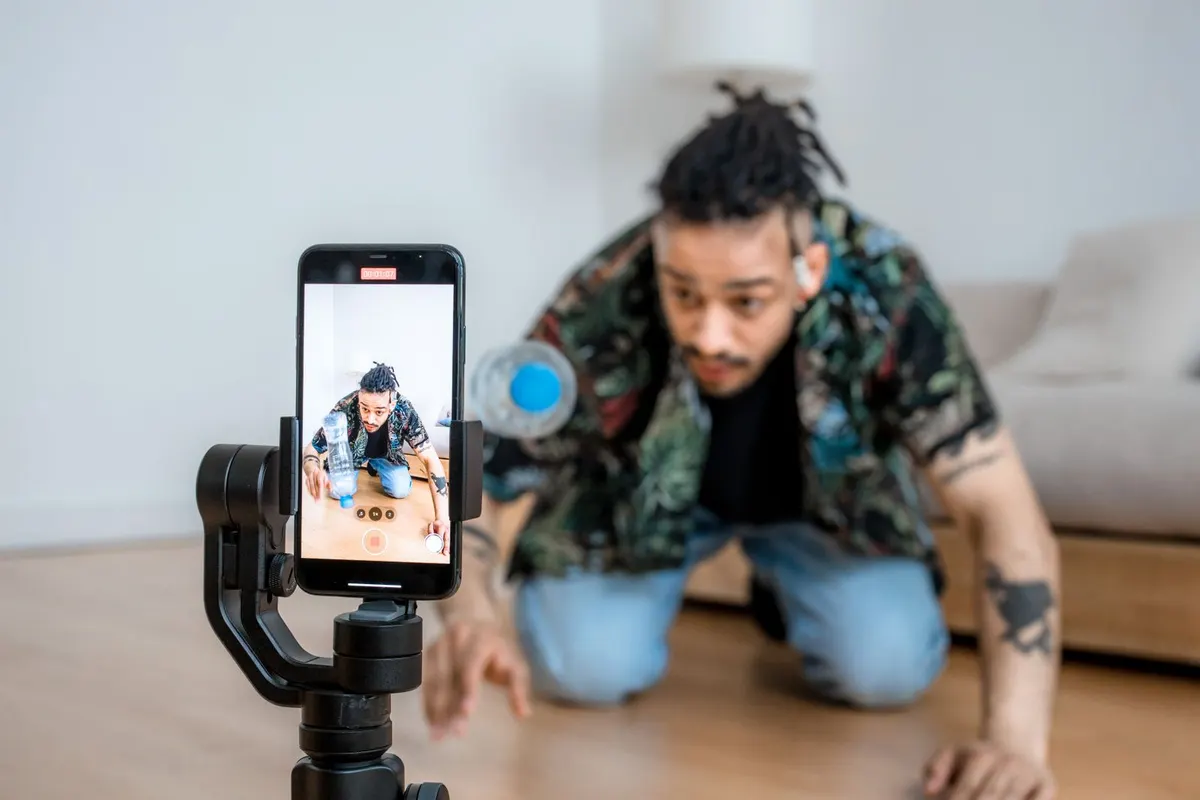
A consideration campaign is built when it's necessary to show the usage, difference, or context of the product. Here, the viewer is looking for an answer to the question "is this suitable for me"; therefore, the creator's real experience and the proof of claims are important. Experience videos, demos, or comparison contents are typical formats. A creator cannot talk about a feature they haven't experienced as if they have; this affects both credibility and legal compliance. If a comparison is to be made, the brand must provide objective and verifiable information about the competing product; otherwise, the creator cannot support the claim, and the content will be revised before publishing.
What infrastructure does an action-oriented campaign require?
An action-oriented campaign is built when a measurable site visit, form fill, or purchase journey is targeted. The prerequisite for this type is the tracking infrastructure: without a link, discount code, or UTM parameter, it cannot be distinguished which visit came from which content. Story links, bio links, or personalized codes are typical methods. The attribution window and platform constraints should be discussed upfront; if a user buys days after seeing the content, this connection may not always be visible. Therefore, in an action-oriented campaign, the result is interpreted not from a single channel but by evaluating all available signals together.
A content creation campaign is not media buying
A content creation campaign is built when creator narrative is needed for the brand's own channels or ads; the output can be a UGC-style vertical video or a product shoot. Here, the main deliverable is not the organic post but the file; therefore, usage duration, platform, and ad permissions must be clearly defined from the start. The right to use the creator's image or voice in an ad does not come automatically; this is a separate permission item, and if its duration is not specified, it should not be considered indefinite. If the production standard (lighting, sound, resolution) is to be used on the brand channel, it is clarified with examples beforehand; otherwise, the delivered content may not meet the brand standard.
When does long-term ambassadorship make sense?
A long-term ambassadorship is considered when aiming for a consistent relationship rather than one-off visibility. Through periodic Reels, stories, and event contents, the message deepens over time; the viewer reads the creator's relationship with the product as a genuine usage habit rather than a one-time ad. In this type, exclusivity, frequency, and how the message will evolve over time are planned from the start. If the creator's limits on working with competing categories (category, duration, geography) are not clear, the risk of a clash arises in the following months. During the ambassadorship, showing different usage moments of the product instead of repeating the same type of content maintains the viewer's interest.
The campaign type selection can be re-evaluated based on the brand's priority at that time; a brand running an awareness-focused campaign initially may switch to a consideration or action-oriented campaign with the same creators in the next period.
Content formats: Reels, Story, Carousel, and live broadcast
Which format will be used within the campaign depends on the goal and the nature of the message. The four formats below serve different purposes; current technical limits (duration, resolution, editing tools) are updated by Instagram from time to time, so we focus on usage logic rather than definitive numerical values. Before publishing, current technical requirements must be verified from Instagram's official help center.
Reels: short vertical video
Reels is the format with the highest potential to reach broad audiences on the explore tab; it consists of short, vertical videos usually supported by music or audio. It is suitable for product introduction, before-and-after demonstrations, rapid information transfer, and brand messages adapted to trending formats. A Reels message that doesn't catch the viewer's attention in the first seconds is skipped before it can be conveyed; thus, the opening second is treated as a separate decision point in the brief. If there is an advertising relationship in Reels, the labeling must be done at the beginning of the video and remain visible continuously.
Story: timely and serial narration
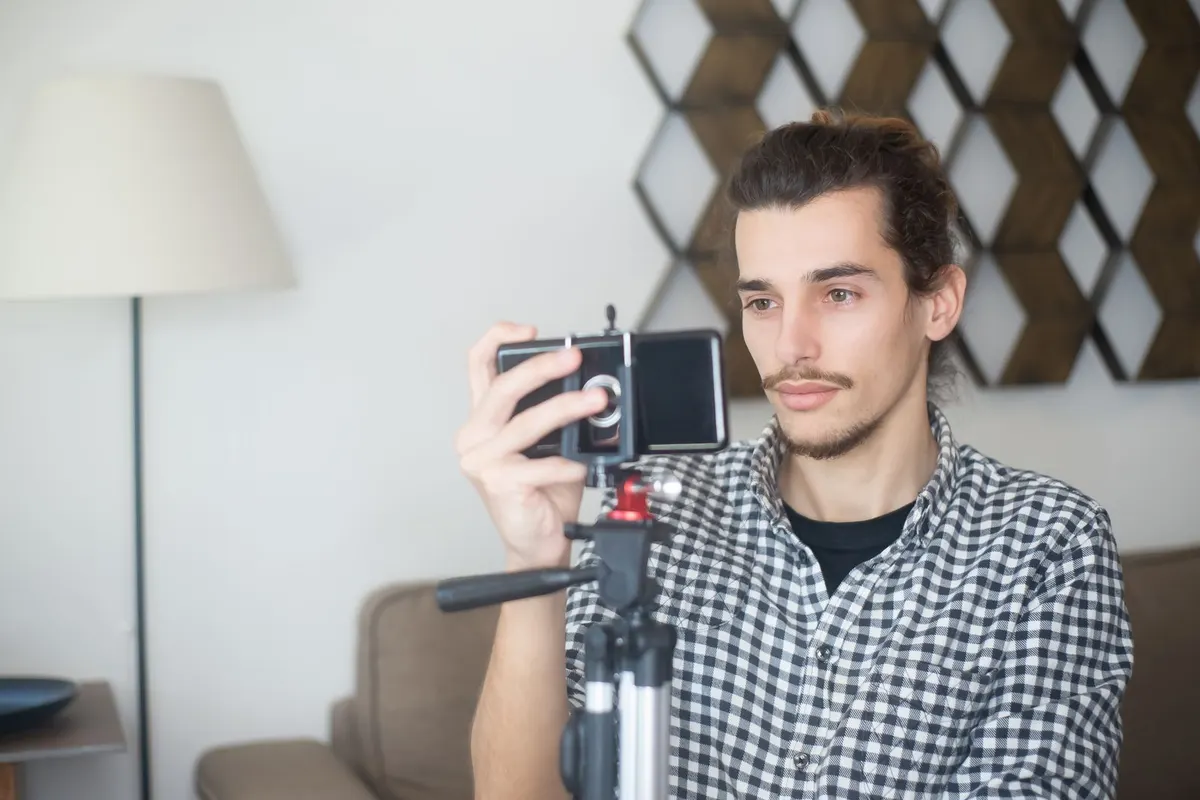
Story is a format where the content remains visible for a limited time, suitable for serial narration and direct redirection. Interaction tools like polls, question boxes, and countdowns carry a more intimate and instant tone compared to permanent posts. Since it's possible to add links, it is frequently preferred for action-oriented uses like discount codes, campaign pages, or form directions. Because the content remains visible for a short time, the commercial ad label must be added to stay on screen for the duration of the post; a label shown only at the opening and then disappearing is not sufficient.
Carousel: multi-page and information-dense narration
Carousel is a format that shows multiple images or short video pages consecutively in a single post. It can carry higher information density than the video format in situations requiring step-by-step narration, comparison, before-and-after series, or presenting product details piecemeal. Because the viewer progresses at their own pace, it remains visible on the account profile for a long time like a permanent post and functions as searchable content. When brand information needs to be given clearly page by page, a carousel yields more readable results than an image squeezed into a single frame.
Live broadcast: real-time interaction

Live broadcast is an unedited and improvised format where the creator interacts with their followers in real-time. It is preferred in situations requiring an instant and intimate connection, such as product launches, Q&As, live try-ons, or event coverage. Since the content is not recorded or edited later, having the brand message clearly discussed beforehand reduces the risk of improvisational errors during the live broadcast. Similar to video sharing platforms, if there is a commercial advertising relationship, this situation must be clearly stated in writing or verbally throughout the broadcast; even if a viewer joins the stream late, they should be able to recognize the ad relationship.
| Format | Strongest Purpose | Permanence | Typical Use |
|---|---|---|---|
| Reels | Broad reach, discovery | Permanent, listed on profile | Awareness, trend adaptation |
| Story | Instant interaction, redirection | Short-term visibility | Action, poll, countdown |
| Carousel | Information-dense narration | Permanent, listed on profile | Consideration, step-by-step narration |
| Live broadcast | Real-time connection | Post-broadcast accessibility varies by account | Launch, Q&A |
In practice, campaigns are not limited to a single format. For a product launch, there's often a countdown via Story first, announced via Reels on launch day, product details explained with a carousel, and a live broadcast planned for Q&A. The format combination is decided based on the goal during the brief phase.
What determines the price of an Instagram influencer campaign?
Providing a fixed range would be misleading. A proposal is prepared after seeing the actual scope; the creator's fee and operations, production, and media items are not the same thing.
| Factor | What does it change? | Required Info for Proposal |
|---|---|---|
| Creator profile and quantity | Matching, communication, and delivery scope | Topic, target audience, preferred scale, quantity |
| Content format and quantity | Production effort and approval flow | Reels, story, post; delivery count |
| Usage rights | Where and how long the content will be used | Platform, duration, region, organic or ad use |
| Timing | Candidate availability and operational intensity | Publishing period, product delivery, approval days |
| Production and logistics | Shoot, location, product, and courier needs | Product type, shoot standard, location |
| Reporting and measurement | Data collection and analysis scope | Target metrics, link/code infrastructure, report frequency |
| Exclusivity | The creator's limits on working with competing brands | Category, duration, and geography |
MyFenomen does not sell fixed-price packages; because with the same budget, it might be more appropriate for one brand to build a deep partnership with a single strong creator, while another brand gains broad distribution with many small-scale creators. A package price forces these two different strategies into the same mold and usually either inflates or narrows the scope.
When planning the budget, the creator fee is not the only item. The breakdown below shows which work areas a campaign budget is typically allocated to; the ratio of items to each other varies based on the campaign's scope, and no fixed percentage is claimed here.

In campaigns using multiple creators, the budget is not distributed equally; each creator's audience size, format complexity, and delivery quantity can vary. Therefore, the proposal is prepared in separate lines on a per-creator basis, and the total budget consists of the sum of these lines.
When the budget is shared early, options are prioritized realistically; when it's not shared, we proceed through scope alternatives, but this may require an additional round of negotiation. A definitive figure regarding the general budget level, which varies by product or category, is not given in advance; each proposal is prepared according to its own scope.
The publishing period can also affect the budget; during intense campaign periods (such as New Year's or major sales events), creator availability may decrease, and flexibility narrows as the planning time shortens. If the launch date is finalized, sharing it as early as possible helps to establish the scope realistically.
Contract and legal disclosure
In Turkey, commercial advertisements made through social media influencers are subject to the "Guidelines on Commercial Advertising and Unfair Commercial Practices by Social Media Influencers" enacted by the Board of Advertisement on May 5, 2021. The guidelines are based on the Consumer Protection Law No. 6502 and the Regulation on Commercial Advertising and Unfair Commercial Practices, and they cover the advertiser, advertising agencies, media organizations, and social media influencers entirely.
How is the advertising relationship disclosed?
The core principle of the guidelines is that in every post where a material gain or a benefit such as a free/discounted product is provided by the advertiser, this relationship must be stated clearly and comprehensibly; covert advertising visually, in writing, or verbally is prohibited. The label or disclosure must be distinguishable from the colors of the post and large enough to be easily readable; the consumer must be able to recognize the advertising relationship the moment they encounter the post without needing to take any other action.
| Platform | Examples of permissible phrases/labels |
|---|---|
| Video (Reels, IGTV, live broadcast) | "This video contains advertisements for [advertiser]." / "This video includes a paid partnership with [advertiser]." / "With the support of [advertiser]." |
| Photo and post | #Ad · #Ad/Promotion · #Sponsor · #Partnership · #Collaboration · "In collaboration with @[advertiser]" |
| Story (short-term content) | Same label set as photo/post; used visibly on screen for the duration of the post |

Boundaries the social media influencer must not cross
- Showing an untried product as if experienced: creating the perception of endorsing a product or service that has not yet been used violates the guidelines.
- Health claims contrary to regulations: posts containing health claims contrary to the relevant legislation cannot be made.
- Unsubstantiated scientific claims: test or research results not based on objective, measurable data cannot be shared.
- Showing a gift product as purchased: creating the impression that a product received for free from the advertiser was bought with their own money is prohibited.
- Hiding the use of filters: if effects or filters are applied in the promotion of the product, this must be clearly stated.
The advertiser's responsibility is also the brand's business
The obligation does not belong solely to the creator. The guidelines hold the advertiser responsible for informing the social media influencer about the rule, requesting compliance with the relevant legislation, and taking precautions against violations; the defense "this was the creator's responsibility" does not exempt the advertiser from this obligation. MyFenomen includes the labeling rule in the campaign brief and verifies this clause separately during the pre-publish check; however, the ultimate legal compliance remains the responsibility of the brand and the creator, and this page does not substitute for legal counsel.
Which clauses must absolutely be included in the contract/brief?
The written scope is recommended to include at least the following clauses:
- Scope and deliverables: how many contents in which format, on what date they will be delivered.
- Fee and payment schedule: amount, payment condition, and advance/balance breakdown if any.
- Usage rights: platform, duration, region, and organic/ad usage breakdown.
- Approval and revision: how many rounds of revisions are allowed and the approval duration.
- Disclosure obligation: which phrase/label will be used, who is responsible.
- Termination and delay conditions: what happens if the delivery is delayed or one of the parties backs out.
Instagram's own partnership label does not conflict with the guidelines
The disclosure obligation under Turkish legislation does not replace Instagram's own "paid partnership" label; the two complement each other. Instagram requires the account to use the partnership label on branded content posts, and this label is the platform's own transparency tool. In the campaign brief, both requirements are addressed together: both a written/labeled disclosure complying with the Board of Advertisement guidelines and the activation of the platform's partnership label.
The information in this section is based on the primary text of the guidelines; it is recommended that the brand verify it with its own legal team or consultant. The disclosure clause added to the campaign brief is additionally marked in the pre-publish checklist.
What do we measure?
The metric set is selected based on the campaign's goal. Platform data, the brand's analytical data, and the insights shared by the creator may not have the same scope; the data source and measurement period are clearly stated in the report.
It is not always possible to attribute a sales result solely to the last click or a single creator in every campaign. The attribution window, cookie consents, channel transitions, and organic effects limit the evaluation. Therefore, we interpret the results with available evidence, not with the language of guarantees.
In reporting, differences on a per-creator and format basis are examined as much as total numbers; however, generalizable rules are not drawn from small samples. A content being viewed more does not inherently prove that it conveyed the message better or generated more sales. Result evaluation is done by returning to the primary goal selected at the beginning.
How often and under what headings is the report prepared?
Reporting frequency is determined by the campaign duration: for a short-term launch, a single final report may suffice, whereas for long-term ambassadorship, periodic interim reports are preferred. Each report specifies from which platform, for which period, and in what scope the data was obtained; numbers coming from different sources (the platform's own insights panel, the brand's analytical tool, the creator's shared screenshot) are kept in separate columns without mixing them in the same table.

In data collection, the creator's own platform insights screen, the brand's web analytics tool, and, if available, Instagram's business/creator tools (e.g., performance summary shared via Creator Marketplace) are usually used together. Which tool will be used and with whom the data will be shared is discussed during the brief phase, as it also depends on the creator's privacy preferences.
Verifiable source instead of screenshots
Collecting only screenshots post-publish makes comparison difficult because the period and source are left ambiguous. Whenever possible, data taken from the platform's own insights panel is verified with the creator's permission or via the brand's own measurement infrastructure. This both increases the reliability of the report and makes cross-campaign comparisons meaningful.
Representative example: how to read a report in an action-oriented campaign?
The following scenario is representative and is not real campaign data. A brand runs an action-oriented campaign via discount codes with three creators. The report retrieves reach and engagement data for each creator from platform insights, and the number of code usages from the brand's own sales system. These numbers coming from two separate sources are placed side-by-side in a single table but are not combined to produce a single "success score"; because reach and code usage rely on different measurement logic. The report explains which creator yielded a result closer to the goal along with its context.
Sector-specific approach
The campaign setup carries different sensitivities based on the sector the brand operates in. The headings below summarize the frequently encountered sector differences; this is not a legal opinion, and compliance with the relevant legislation is always the responsibility of the brand and, if necessary, its competent consultant.
Retail and e-commerce
If stock, shipping time, and return conditions are not clear, an action-oriented campaign will create expectations but fail to meet them. Product links, discount codes, and stock tracking must be ready before the campaign begins.
Beauty and cosmetics
Skin type and result claims are kept limited to subjective experience; phrases like "guaranteed results" are avoided. In images where filters or effects are used, this is clearly stated.
Food and beverage
Nutritional value, health benefits, or claims like "100% natural" must be based on relevant legislation and label information. A creator cannot appear to endorse a health benefit they have not experienced.
Technology and apps
Performance, speed, or compatibility claims must be testable; if there is a subscription or paid feature, this is clearly stated. Demo contents show the real usage flow.
Home and lifestyle
Showing the product in a real usage environment yields more convincing results than a studio setup. For products requiring assembly or installation, the difficulty of the process is conveyed without exaggeration.
Finance and insurance
Yield, interest, or earning claims are strictly regulated; the social media influencer must not fall into the position of giving investment advice. In this category, it is recommended that the brand and creator also pass a legal/compliance check.

Sector-specific sensitivities are shared with the creator during the brief phase; these items are checked separately during the approval process. If you operate in an unlisted sector, we outline category-specific constraints together during the discovery meeting.
Common mistakes
The mistakes below are the ones we most frequently encounter during the campaign process and can easily be prevented when discussed beforehand.
- Making follower count the only selection criterion: leaves out topic and audience match, content quality, and genuine relationship.
- Turning the brief into ad copy: erases the creator's natural narrative and alienates the content for the viewer.
- Discussing usage rights after the fact: creates uncertainty for ad, website, or other platform use.
- Loading every goal onto the same campaign: blurs the creative direction and success metrics.
- Leaving the legal disclosure solely to the creator: the responsibilities of the advertiser, agency, and platform parties must be evaluated separately.
- Collecting only screenshots post-publish: comparison becomes difficult if the source, period, and definition are not clear.
- Choosing the format before the goal: saying "have them shoot a Reels" prioritizes the format decision before clarifying which purpose (awareness or action) will be served.
- Not writing sector sensitivity into the brief: if claim limits in regulated categories like health, finance, or food are not shared with the creator, revision needs arise post-publish.
Checklist
You can use the two short lists below before starting the campaign and before publishing. The list is a reminder not to forget the scope; the campaign's own brief and proposal document are taken as the basis for each campaign.
Pre-brief checklist
- Is the campaign's primary goal (awareness, consideration, action, content creation, ambassadorship) defined in a single sentence?
- Have the target audience, product/service info, and mandatory/to-be-avoided claims been put into writing?
- Has the budget framework or at least the scope priority been determined?
- Are usage right needs (organic only, or will it be used in ads as well) clarified?
- Is it planned which data will be collected, from which source, and how often for measurement?

Pre-publish checklist
- Has the commercial ad label/phrase been added visibly and in a manner appropriate for the platform used?
- Do the claims in the content align with the verifiable information provided by the brand?
- Are the usage rights and publishing duration consistent with the proposal/brief?
- Has Instagram's partnership label been activated on the post or Reels, if relevant?
- Is it known by all parties which data will be collected, when, and by whom for reporting?
Glossary of terms
The terms below are concepts frequently found in briefs, proposals, and reports during the campaign process; they are ordered by frequency of use, not alphabetically.
- Influencer
- A person who engages in marketing communication to promote, sell, or rent a good or service via their social media account. The definition is located in Article 4 of the Board of Advertisement guidelines.
- Branded content
- Content by a creator that features or is influenced by a brand in exchange for a commercial partnership. Instagram requires the use of the partnership label on such posts.
- Paid partnership label
- Instagram's built-in label indicating that a post or Reels contains a commercial partnership; it is a transparency tool and does not inherently mean algorithmic penalization.
- Reach
- The number of unique accounts that have seen a piece of content at least once. Multiple views by the same account increase impressions, not reach.
- Views/impressions
- The number of times a piece of content appears on screen; if the same person sees the content multiple times, each is counted separately.
- Engagement rate
- The ratio of actions like likes, comments, shares, and saves to reach or follower count; there is no single universal calculation standard, different tools may use different formulas.
- Usage rights
- Permission defining on which platform, for how long, and in which region the produced content can be used outside of organic publishing; it is a scope item that must be negotiated separately.
- Partnership ads
- An Instagram ad format where the brand can boost the content published from the creator's account via its own ad account, with the creator's consent.
- Micro influencer
- A creator with a relatively small but close-knit community focused on a specific topic; classification varies from source to source, and there is no single universal threshold.
- UGC (User-generated content)
- An amateur/natural-looking content format that feels more like a personal post than a brand ad; it can also be produced with professional production.
- Attribution window
- A measurement parameter defining how long a click or view can be linked to a subsequent action (sale, form, etc.).
- Exclusivity
- A contract clause where the creator agrees not to work with competing brands for a certain period and category; its scope (category, duration, geography) must be clearly defined.
- Brief
- The working document where the brand defines the campaign goal, target audience, message, and constraints; it is the reference point for the process.
- Creator Marketplace
- Meta's in-platform tool that helps brands match with content creators and share performance data.
- Whitelisting / partnership ad permission
- The technical and contractual approval process that allows the brand to run ads through the creator's account.
- Story highlight
- An Instagram feature allowing story content to be permanently displayed on the profile after the time limit expires.
Frequently asked questions
What is an Instagram influencer campaign?
It is a marketing effort conducted by a brand with content creators on Instagram over a defined goal, delivery, duration, and measurement plan. If there is a fee, gift product, affiliate earning, or any other value exchange, the commercial relationship must be disclosed correctly.
How many influencers are needed for a campaign?
There is no single right number. The target audience, campaign duration, content density, budget, geography, and expected role per creator are evaluated together. A small number of strong matches may be more suitable than a broad but irrelevant list.
Should a micro influencer or a large account be chosen?
The choice is not made solely based on follower scale. Micro creators can offer a close community connection on a specific topic; larger accounts can provide broader distribution. The goal, content format, audience overlap, and budget decision determine this.
Do you guarantee sales?
No. Sales depend on the offer, price, site experience, stock, media, measurement infrastructure, and many external factors. We clarify the campaign goal and measurement plan, and report the reachable results; we do not guarantee definitive sales or reach.
How do you select creators?
Topic and audience match, content tone, format competency, quality of past posts, brand safety, availability, and commercial terms are evaluated together. The final candidate list is created based on the campaign brief.
Can we see the content before it gets published?
The approval flow can be defined in the proposal and brief. Checks are kept limited to mandatory information, verifiable claims, brand safety, and scope. Not unnecessarily turning the creator's natural narrative into scripted text is vital for content credibility.
Is Reels or story better?
Reels may be suitable for discovery and narration; while story is suited for timely direction, serial relay, or linking. The best format is selected based on the goal and the creator's strong storytelling style; there is no single universally superior format.
Can we use the content in ads?
Only if the usage rights and necessary permissions are clearly defined in the scope. Platform, duration, geography, editing rights, and partnership ad permissions are separate decision areas. Organic post approval does not automatically grant unlimited ad usage rights.
Is sending a gift product considered an ad?
Meta considers content highlighting a product in exchange for free or loaned goods as a value exchange and requires the paid partnership label. The commercial ad disclosure obligations in Turkey must also be considered separately.
How long does it take to prepare a campaign?
The duration varies by candidate count, product logistics, content complexity, approval rounds, usage rights, and publishing schedule. Instead of making up a fixed timeframe, we build a realistic plan working backward from the target publish date.
Can we start if there's no brand brief?
Yes; during the discovery phase, the goal, audience, message, mandatory details, claims to avoid, and measurement expectations can be clarified together. The decision framework must be in writing before beginning the creator search.
What data do we get in the reporting?
Depending on the goal and access, publish links, content delivery status, reach, impressions, views, engagement, and action data via appropriate tracking infrastructures can be addressed. The source, period, and scope of each metric are specified in the report.
Is a one-off effort or ambassadorship more appropriate?
A single-period effort might suffice for a launch or a specific announcement. If the product usage needs to be shown over time and the message developed gradually, ambassadorship can be considered. Frequency, exclusivity, and content variety are planned upfront.
What info should we share to get a proposal?
The brand and product, goal, target audience, desired date, estimated creator or content count, usage rights, budget framework if any, and measurement expectations are a sufficient start. Missing points are completed in the discovery meeting.
Is Instagram's partnership label the same as the label required by the Board of Advertisement?
No, they are separate obligations and do not replace each other. Instagram's partnership label is the platform's own transparency tool; whereas the Board of Advertisement guidelines require commercial ads directed at consumers in Turkey to be clearly stated in writing or via a label. Both are planned together in the campaign brief.
How do we decide which content format to choose?
The format decision follows the goal. If broad reach is desired, Reels stands out; if instant redirection is desired, story; if step-by-step information transfer, carousel; if real-time interaction, live broadcast. In most campaigns, multiple formats are used together.
Our sector is regulated, does this affect the campaign?
Yes. In regulated categories like health, finance, and food, claim limits and required disclosures are further defined during the brief phase. MyFenomen's operational checks do not replace the necessary professional or legal review; this review remains the brand's responsibility.
What clauses must absolutely be present in the contract?
Scope and deliverables, fee and payment schedule, usage rights, approval/revision process, disclosure obligation, and termination conditions are the minimum clauses that must be included. These clauses are documented during the proposal phase and serve as a reference point for both parties.
How is the budget distributed if we use multiple creators?
The budget is not divided equally among creators; it is priced in separate rows based on each creator's audience size, format complexity, and delivery volume. The proposal is presented as the sum of these rows; a breakdown per creator is shared instead of a single average figure.
Did this page help you make a decision?
Your selection is only shown on this page; it is not sent to the server.
Sources and scope
Platform features, commercial communication legislation, and measurement definitions were verified on September 30, 2026, using the primary sources below. The sources do not serve as result guarantees or MyFenomen customer data.
- Instagram Help Centre — What is considered branded content
- Meta for Business — Instagram & Facebook Reels ads
- Instagram Help Centre — Use of the paid partnership label
- Meta Business Help Centre — About Instagram Insights
- Republic of Turkey Ministry of Trade / Board of Advertisement — Guidelines on Commercial Advertising and Unfair Commercial Practices by Social Media Influencers (May 5, 2021, Articles 1-13)
- Google Search Central — Breadcrumb structured data
- Google Search Central — AI features and structured data notes
